
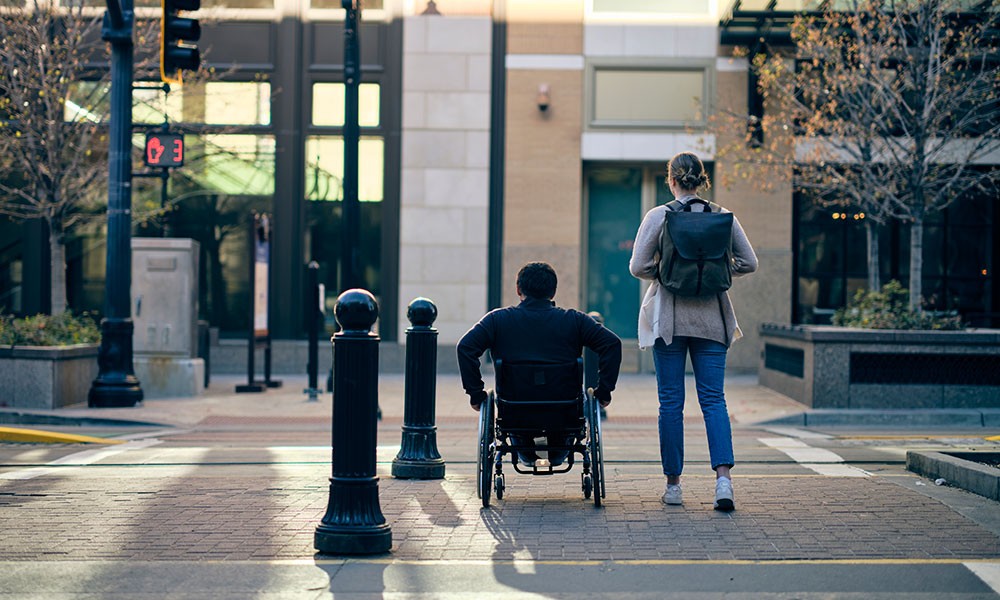
“Being disabled should not mean being disqualified from having access to every aspect of life.” — Sarah Levis on Medium
Why accessibility benefits everyone
When people hear the word accessibility, they often picture a wheelchair ramp.
While ramps are an important part of accessibility, they are only one piece of a much bigger picture.
Accessibility is about creating environments, services and technology that everyone can use, regardless of age, ability or circumstance.
It’s about removing barriers so people can participate fully in everyday life.
At Life Unfolded, we believe accessibility isn’t a luxury it’s a necessity.
Accessibility means designing spaces, products and services so they can be used by as many people as possible.
This includes people with:
- Physical disabilities
- Visual impairments
- Hearing impairments
- Cognitive disabilities
- Neurodiverse conditions
- Temporary injuries
- Chronic illnesses
- Older adults
Accessibility recognises that people have different needs and that good design should include everyone.
Many people don’t realise how often they benefit from accessibility themselves.
For example:
Automatic Doors
Originally designed to improve accessibility, automatic doors also help parents with prams, delivery drivers and people carrying shopping.
Captions on Videos
Captions support people who are deaf or hard of hearing, but they’re also useful when watching videos in noisy places or when you don’t have headphones.
Ramps
Wheelchair users rely on ramps, but so do parents with prams, travellers with luggage, cyclists and delivery workers.
Clear Signage
Easy-to-read signs help visitors, older adults, tourists and anyone navigating an unfamiliar building.
Accessibility benefits everyone.
Inclusive workplaces are stronger workplaces.
Simple adjustments can make a significant difference, such as:
- Adjustable desks
- Flexible working arrangements
- Screen-reading software
- Speech-to-text technology
- Accessible meeting rooms
- Clear communication
These changes don’t just support employees with disabilities they often improve productivity and wellbeing for everyone.
Today, much of our lives happens online.
If a website isn’t accessible, people can be excluded before they even enter a building.
Good digital accessibility includes:
- Clear headings
- Easy-to-read fonts
- High colour contrast
- Alternative text for images
- Keyboard navigation
- Video captions
- Simple language
An accessible website is easier for everyone to use.
Accessibility doesn’t always require major renovations or expensive technology.
Sometimes, the smallest improvements have the greatest impact.
Holding a meeting in an accessible venue.
Providing documents in accessible formats.
Using respectful language.
Asking someone what support they need instead of making assumptions.
These small actions help create a culture where everyone feels welcome.
Accessibility is more than a legal requirement.
It’s a reflection of how we value people.
When barriers are removed, people gain opportunities to learn, work, travel, socialise and contribute to their communities.
That benefits all of us.
A truly inclusive society isn’t one where people have to ask for access.
It’s one where access is built in from the start.
Accessibility isn’t about making life easier for a few people.
It’s about making life better for everyone.
- Every ramp.
- Every caption.
- Every accessible website.
- Every thoughtful design choice.
These are reminders that inclusion starts with recognising that every person deserves the opportunity to participate fully in society.
Because accessibility isn’t just about buildings.
It’s about belonging.
Leave a Reply