
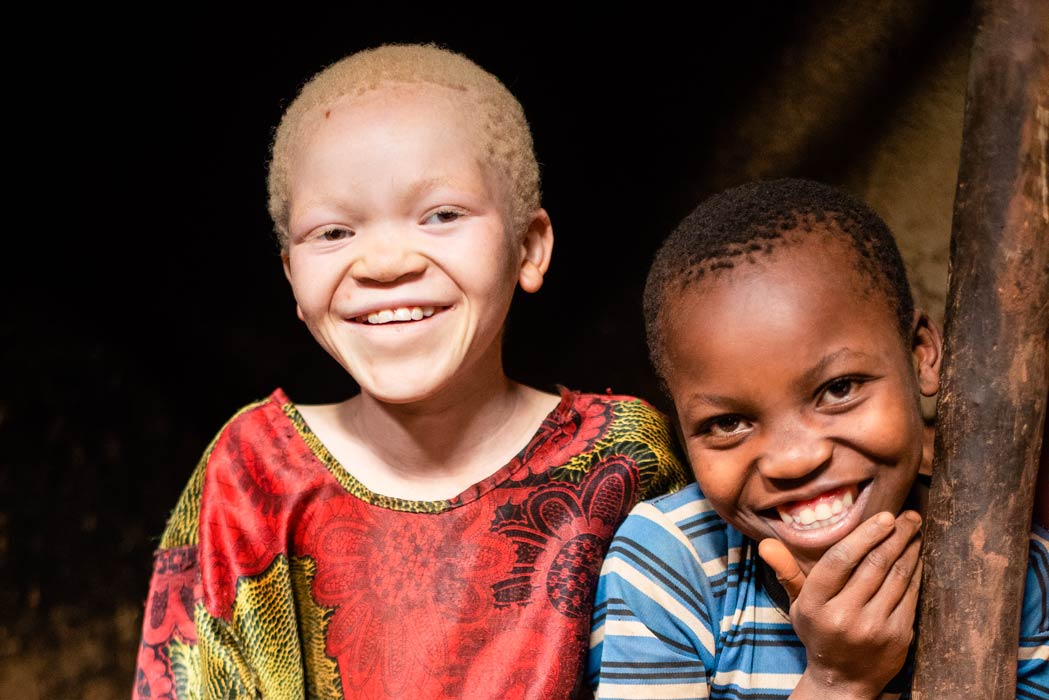
Albinism is a beautiful difference that deserves to be celebrated. – Edith Jibunoh
Albinism is a rare, non-contagious, genetic condition that affects people of all ethnic backgrounds worldwide. It results in little or no production of melanin, the pigment responsible for colouring the skin, hair and eyes. Albinism also impacts vision, often causing lifelong visual impairment. While it’s a condition rooted in biology, its effects go far beyond physical appearance, influencing social and cultural experiences in profound ways.
Albinism occurs when one or more of the genes responsible for producing melanin are defective. These genetic changes are inherited, meaning both parents must carry the gene for a child to be born with the condition. Albinism exists in several types, each varying in severity and how it impacts the skin, hair and eyes.
For individuals with albinism, the lack of melanin in the skin makes them highly sensitive to the sun. This increases the risk of sunburn and skin cancer, making sun protection a daily priority. Vision challenges, such as reduced sharpness or sensitivity to light, can make navigating the world more difficult.
Yet, the social challenges often outweigh the physical ones. In many parts of the world, myths and stigma surrounding albinism create barriers to education, employment and acceptance. Misconceptions can lead to discrimination, isolation, or worse acts of violence.
Organisations around the globe work tirelessly to dispel myths and promote the rights of people with albinism. In South Africa, for example, advocacy groups focus on education, health access and legal protections. Public campaigns, like International Albinism Awareness Day on June 13, amplify their voices, celebrating the resilience and beauty of those with the condition.
Albinism teaches us that diversity is more than skin deep. By educating ourselves and others, we can break down harmful stereotypes and create a world that embraces differences. From advocating for inclusive policies to simply engaging in respectful dialogue, each action helps to build a brighter, more equitable future.
The journey of albinism is a reminder of the strength found in uniqueness. By standing in solidarity with those who have albinism, we help illuminate the path toward acceptance, equality and understanding. Together, let’s unfold the stories of albinism and celebrate the courage and people of those living with this condition.
Leave a Reply